Granular Aeration
Improve soil health and turf growth with a low-impact alternative to core aeration—ideal for lawns that need better roots without the plugs.
Learn about granular aeration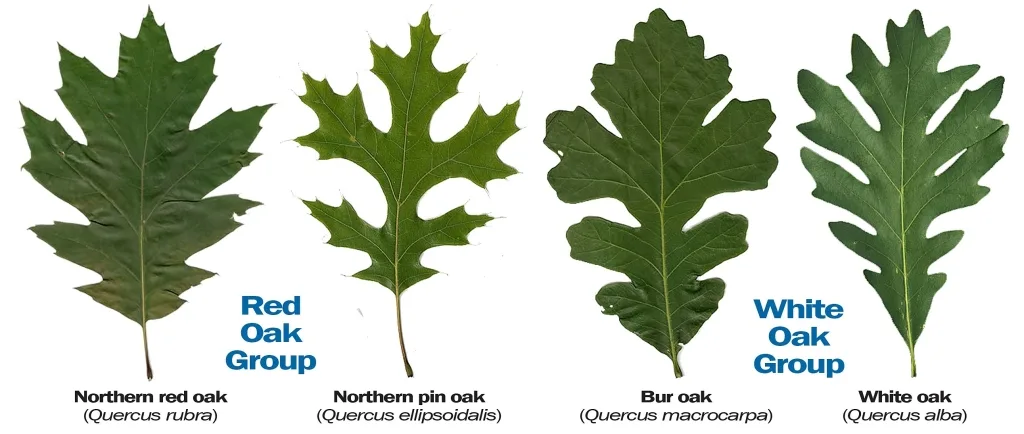
Prevention and management for oaks in Lancaster, Harrisburg, and the surrounding counties

Oak wilt is a serious vascular disease of oaks caused by a fungal pathogen. It spreads through root grafts between nearby oaks and by certain insect vectors that can move spores from diseased to healthy trees. Recognizing risk and acting early is central to oak wilt treatment and tree disease prevention on your property.
Structural pruning, removals, and risk assessment from our ISA-certified arborist team often work together with plant health recommendations. For ongoing pest and disease support, see insect & disease management.
Infected oaks may show wilting, bronzing, or leaf drop starting at the top or outer canopy. Red oak group species can decline rapidly once symptoms appear. White oaks may progress more slowly. Laboratory confirmation is sometimes needed because other stresses mimic oak wilt disease. Professional evaluation helps avoid unnecessary removals or missed infections.
Oaks are long-lived landscape and forest trees across Lancaster, Dauphin, York, and Berks counties. Losing mature oaks affects shade, property value, wildlife habitat, and neighborhood character. Education and prevention are cost-effective compared to emergency removals after widespread decline.
Root grafts allow the fungus to move underground between oaks of the same species in close proximity. Above ground, sap-feeding beetles can introduce spores to fresh wounds—another reason timing of pruning matters. Storm damage and construction injuries also create entry points if not managed carefully.
Impact ranges from single-tree loss to multiple trees on a lot or along a street where roots are interconnected. Early detection and boundary planning can limit spread. We help you understand realistic outcomes—oak wilt treatment and management are site-specific and regulated in some cases; we do not guarantee cures but focus on sound arboriculture and plant health planning.
A simplified timeline of how oak wilt disease can progress and where intervention may apply. Your property may differ; use this as a conversation starter with our team.
Stage 1
Spores enter through wounds or root grafts; pathogen moves in water-conducting tissue.
Stage 2
Canopy thinning, discoloration, or rapid decline depending on oak group and conditions.
Stage 3
Root grafts and vectors may move the disease to nearby oaks without management.
Stage 4
Sanitation, barriers, pruning timing, and removals tailored to the site and regulations.
For Oak Wilt, you get a team with deep roots in South-Central Pennsylvania and a commitment to quality.
Our technicians are properly trained, registered and licensed to perform effective service using professional methods and label-compliant practices.
Serving Lancaster, Dauphin, York, and surrounding counties for decades.
Generations of property care expertise and a track record of satisfied customers.
Services tailored to your property, schedule, and goals.
We offer a full range of plant health care solutions for your property.
Contact us to discuss oak wilt concerns and a plan for your trees.
Prefer to Call?
Speak with one of our experts directly
Call us (717) 896-6023Let's discuss oak health and oak wilt questions on your property