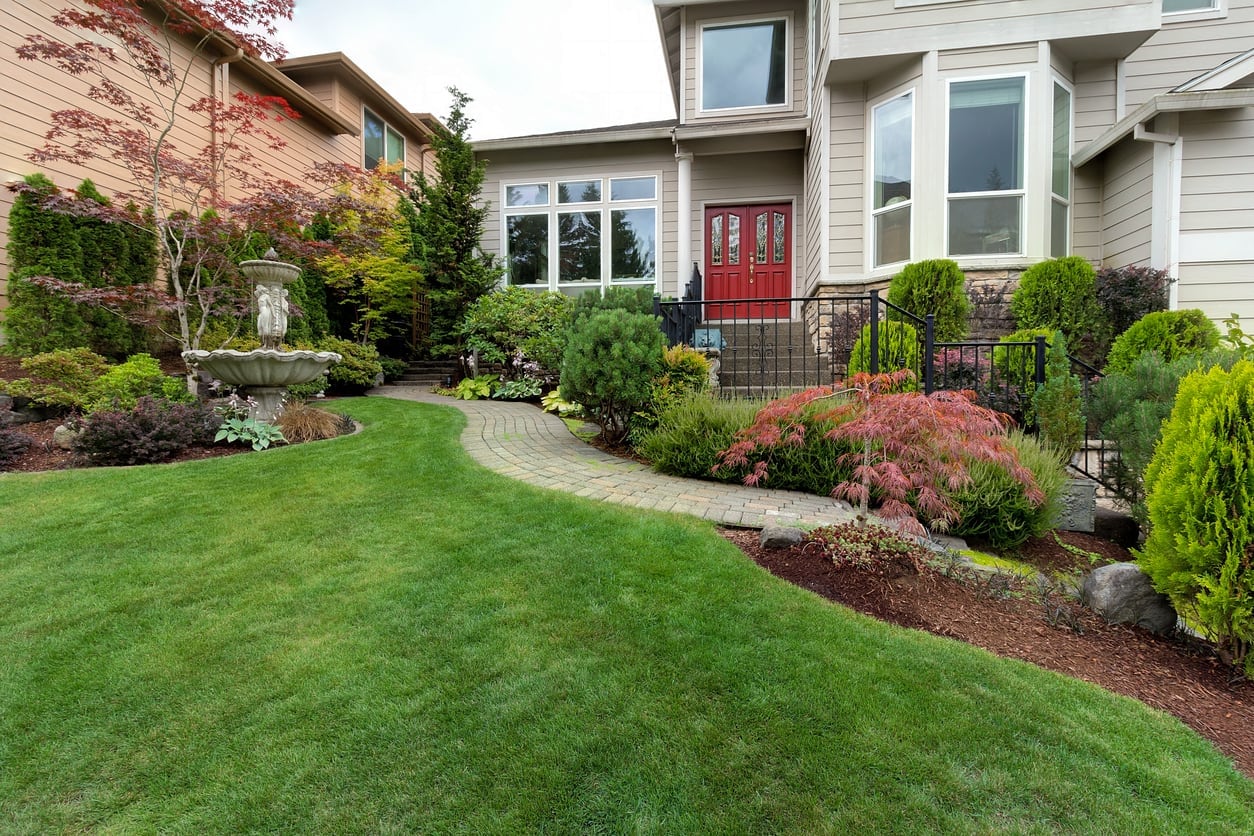
A fresh layer of mulch gives landscape beds a clean, finished look. Beyond appearance, mulch offers real benefits for the health of trees and shrubs. When it is applied incorrectly, though, mulch can create the very problems homeowners hope to avoid. Here is how to get the benefits of mulch without the drawbacks.
The Benefits of Mulch
- Moisture retention. Mulch slows evaporation from the soil surface, helping roots stay moist longer between rainfall and watering.
- Weed suppression. A proper layer blocks sunlight from reaching many weed seeds, which reduces competition for water and nutrients.
- Temperature moderation. Mulch insulates the soil, keeping roots cooler in summer and buffering temperature swings in winter.
- Soil improvement. Organic mulches such as shredded hardwood break down over time, adding organic matter that supports soil structure and beneficial soil life.
- Protection from equipment. A mulched ring around a tree keeps mowers and string trimmers away from the trunk, reducing the chance of bark wounds.
The Right Depth: 2 to 3 Inches
For most trees and shrubs, a layer 2 to 3 inches deep is enough. That depth helps hold moisture and suppress weeds while still allowing air and water to reach the soil. In heavy clay or poorly drained areas, staying toward the lower end of that range is a good idea.
Mulch also builds up over time. When beds are topped off every year without loosening or removing the old layer, the total depth can quietly reach 6 inches or more. Before adding new mulch, check how much remains. Often, raking to loosen the existing layer and adding a light top layer is all that is needed.
Keep Mulch Away From the Trunk
One of the most common landscape mistakes is the mulch volcano, a cone of mulch piled high against the trunk of a tree. Tree bark is not designed to stay constantly wet. When mulch sits against it, the bark can soften and decay, opening the door to fungi, insects, and rodents.
Pull mulch back roughly 3 to 6 inches from the trunk so the root flare stays visible. The root flare is the area at the base of the tree where the trunk widens as it meets the roots. From there, spread mulch outward in a wide, flat ring, ideally several feet across and extending toward the outer edge of the branches where practical. Think of a donut rather than a volcano. The same principle applies to shrubs: keep mulch pulled back a few inches from the base of the stems.
Warning Signs of Over-Mulching
Too much mulch, or mulch in the wrong place, can lead to rot, pest activity, and root problems. Watch for these signs:
- Mulch piled against trunks or stems, hiding the root flare
- Bark at the base of the tree that looks dark, soft, cracked, or loose
- Small roots growing up into the mulch layer instead of down into the soil, which over time can circle and girdle the trunk
- A matted, crusted surface that sheds water instead of letting it soak through
- A sour or vinegar-like smell, which can mean the mulch has become waterlogged and is lacking oxygen
- Heavy mushroom or fungal growth combined with any of the signs above
- Tunnels or chewed bark at the base of the plant, often a sign that voles or other rodents are sheltering in deep mulch
- A thinning canopy, yellowing leaves, or branch dieback that develops over several seasons without another clear cause
If you notice these signs, pull excess mulch away from the trunk and reduce the overall depth. If the bark or roots appear damaged, a certified arborist can evaluate the tree and recommend next steps.
Tips for Choosing and Applying Mulch
- Choose a quality organic mulch, such as shredded hardwood or pine bark, that will break down and feed the soil over time.
- Apply mulch in spring once the soil has warmed, or in fall as part of preparing beds for winter.
- Water the soil before mulching if conditions are dry, since mulch can slow how quickly light rainfall reaches the soil.
- Rake the surface periodically to keep it loose so air and water can pass through.
- Pair mulching with a clean bed edge to help keep mulch in place and give the landscape a crisp, defined look.
Professional Edging and Mulching
Well applied mulch is one of the simplest ways to support healthy roots and an attractive landscape. The Tomlinson Bomberger team applies mulch at the proper depth and spacing around trees and shrubs throughout Lancaster, Harrisburg, and the surrounding counties. Learn more about our Edging and Mulching service, or contact us with questions about your beds.
Call (717) 399-1991, use contact, or request a quote. We serve homeowners across our service areas in South-Central Pennsylvania. Browse the blog for more tree and landscape topics between visits.