Emerald ash borer has been one of the most damaging tree pests to affect Pennsylvania in recent decades. Since its introduction to the state, it has killed countless ash trees and altered landscapes in communities throughout the region.
Which is why homeowners might assume all their ash trees are destined for the same fate.
Well, that's not necessarily the case.
Healthy ash trees can be saved, and even ash trees with early signs of infestation may still be treatable.
All it takes is catching it early.
If you have an ash tree providing shade, character, or value on your property, having it inspected proactively to determine whether it can be saved is a good idea. Our insect and disease management team and ISA certified arborists evaluate ash trees as part of broader plant health care.
What Is Emerald Ash Borer?
Emerald ash borer, or EAB, is a small invasive beetle that feeds on ash trees.
Adult emerald ash borers are metallic green and about half an inch long.
However, it's the larvae that do the most damage.
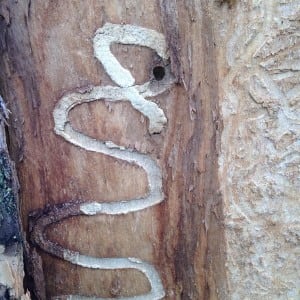
Females lay their eggs on ash trees. When those eggs hatch, the larvae tunnel under the bark and feed on the vascular tissue—the tissue that carries water and nutrients throughout the tree.
As they feed, they create winding tunnels that disrupt this flow. Over time, the tree becomes less able to move water and nutrients from the roots to the canopy.
You'll start noticing branches dying back and portions of the crown thinning, and ultimately the tree will die.
Early Infestations Are Hard to Detect
Emerald ash borer has been so damaging because the insects spend most of their life under the bark.
That means you might not be able to detect an infestation from the ground—which is why proactive inspections are so valuable.
You don't have to wait for your ash trees to look unhealthy to have them inspected.
In fact, treatment is most effective when you start before the tree has already lost too much canopy and isn't in too much decline.
So knowing what to look for matters.
Emerald Ash Borer Signs to Look For
Common early warning signs include canopy thinning, D-shaped exit holes, woodpecker activity, and unusual shoots along the trunk. The more of these symptoms you notice together, the higher the likelihood there's a problem.
Canopy Thinning
One of the most common signs of emerald ash borer is canopy thinning.
You'll start noticing less foliage on branches, the crown will look less dense in places, and you may see branches dying back.
Crown thinning can be caused by a number of things. However, if you've suddenly noticed your ash tree's canopy looking thinner than in previous years—especially in the upper canopy—it's something you want to look into. The sooner, the better.
D-shaped Exit Holes
When emerald ash borer adults exit the tree, they leave behind small holes in the bark.
These holes are easy to mistake for something else, but they're distinctively shaped like the letter D rather than a perfect circle.
They can be hard to spot, especially higher up in the canopy, but D-shaped holes in the bark of an ash tree are a strong indication of emerald ash borer.
You may also spot winding galleries under loose or damaged bark, where larvae have been feeding.
Woodpecker Activity
Woodpeckers eat emerald ash borer larvae under the bark.
In their efforts to find insects, they peck bits of the outer bark off, which may leave spots on the trunk or larger branches where bark has been removed, revealing lighter-colored wood.
While woodpeckers can appear on trees without emerald ash borer, unusually high woodpecker activity on an ash tree—especially alongside canopy thinning or bark changes—may be reason to have the tree inspected.
Unusual Shoots Along the Trunk
When ash trees are under stress, they may produce unusual amounts of shoots along the trunk or larger branches.
This is the tree's way of responding to stress elsewhere. While the sprouting itself may seem like a good thing, unusual sprouting directly from the trunk may indicate the canopy is under stress.
The more symptoms you notice—canopy thinning, woodpecker activity, exit holes, and excessive sprouting along the trunk—the higher the likelihood there's a problem.
Can an Infested Ash Tree Still Be Saved?
Yes—as long as the tree isn't too far along.
If the tree is healthy with a full or near-full canopy, it may be a good candidate for treatment.
Ash trees with early infestations may also be treatable as long as they still have sufficient healthy tissue in the vascular system.
If the tree has already lost a good amount of canopy, it is much less likely that treatment can save it.
Systemic treatments need healthy tissue to move through the trunk and canopy. If emerald ash borer has already caused too much damage to that tissue, the tree won't be able to distribute the treatment effectively.
Which is why waiting until the tree is in decline doesn't leave you with many options.
If you have an ash tree that provides shade, character, or value to your landscape, you want to know now rather than later.
How Emerald Ash Borer Is Treated
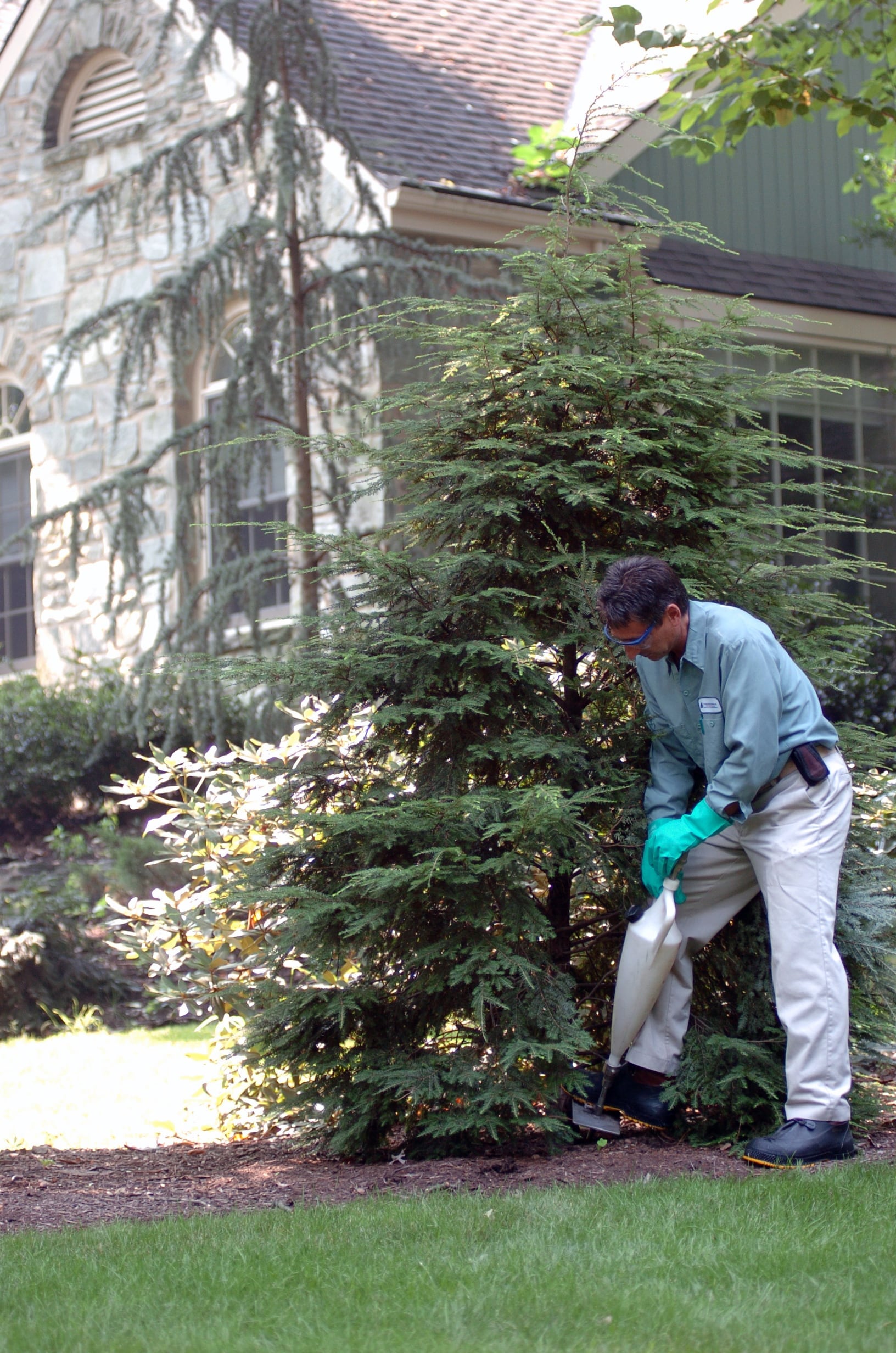
Several systemic insecticides can be used to treat ash trees for emerald ash borer.
These treatments may be applied to the soil around the tree, the lower trunk, or directly into the tree, depending on the tree and the treatment plan.
Trunk injection is typically used for larger or more valuable landscape shade trees. The treatment is injected into the tree's vascular system, where it can move up through the canopy.
The goal is to control emerald ash borer larvae before they cause enough damage to seriously weaken the tree.
Treatments like these are typically part of an ongoing management plan rather than a one-time application. The right approach depends on the size, condition, location, health, and value of the tree to the property owner. Ongoing woody plant support often sits under tree and shrub care.
When Removal May Be the Better Option
Sometimes removal is the better option rather than treating an ash tree.
If the tree has already lost a good amount of canopy, has major structural issues, or is declining for more than one reason, removal may be the best choice.
Severely declining ash trees are a particular concern because the wood dries out and becomes brittle as the tree deteriorates. That can create a hazard of falling trees or branches—especially near a home, driveway, sidewalk, or other frequently used area.
The important thing is to have each tree assessed individually.
Not every ash tree needs to be removed. And not every ash tree can be saved. When removal is needed, see tree removal and stump grinding.
Proactive Inspections Give You More Options
Emerald ash borer has had a big impact on Pennsylvania's ash trees, but that doesn't mean they can't be saved.
If you have a healthy ash tree that provides good shade, character, or value to your landscape, you may want to treat it and try to save it.
The best time to do that is before the tree is in decline.
A certified arborist can confirm whether a tree is an ash, assess its health, look for signs of emerald ash borer, and determine whether it is a good candidate for treatment.
Proactive measures give you more options. Waiting until most of the canopy has already been lost may mean you won't have the chance to preserve it.
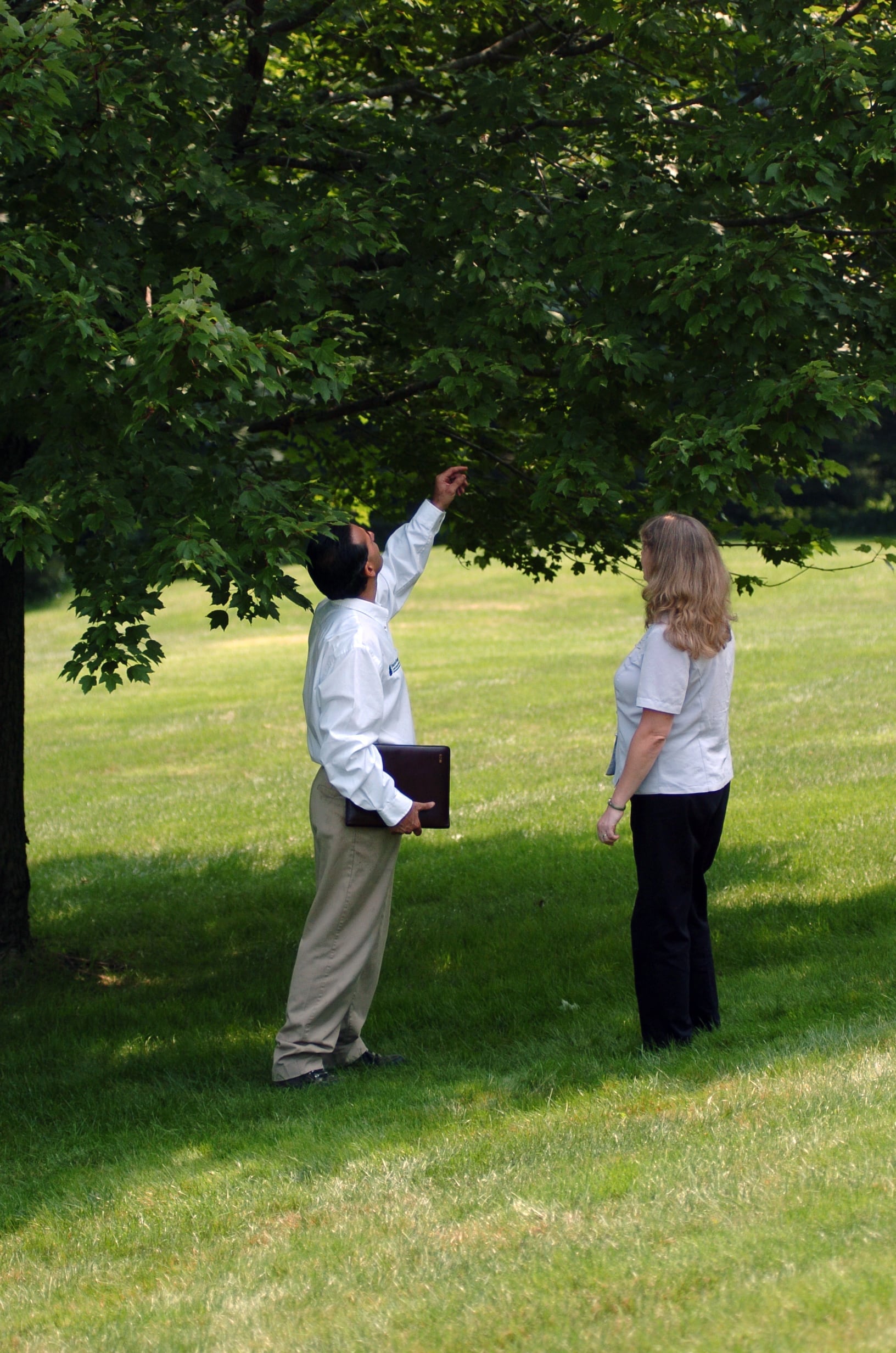
Tomlinson Bomberger's certified arborists can inspect ash trees throughout Central Pennsylvania and determine the best next steps for treating or removing trees based on the condition of each tree.
If you have an ash tree on your property, schedule an inspection and see if we can treat it to help preserve it. Call (717) 399-1991, use contact, or request a quote. We serve homeowners across our service areas in South-Central Pennsylvania. Browse the blog for more tree and landscape topics between visits.